Lake Escape
Where the Grand Tour never really ended.
Como was a mood before it was a place.
Long before it appeared on anyone’s itinerary, Lake Como was already a rumour. Shelley came looking for a house and wrote to Byron about a villa with the water at its door. Stendhal kept returning to it in fiction. The lake never needed tourism to become famous. It only needed someone to write it down.
What they found, and what remains, is a particular kind of stillness. Mountains fold into water. Villas rise from the shoreline as though they simply grew there. Bellagio dazzles, Varenna listens, and neither town has ever needed the other’s approval. That may be the real luxury here: two entirely different ideas of beauty, twenty minutes apart by boat.
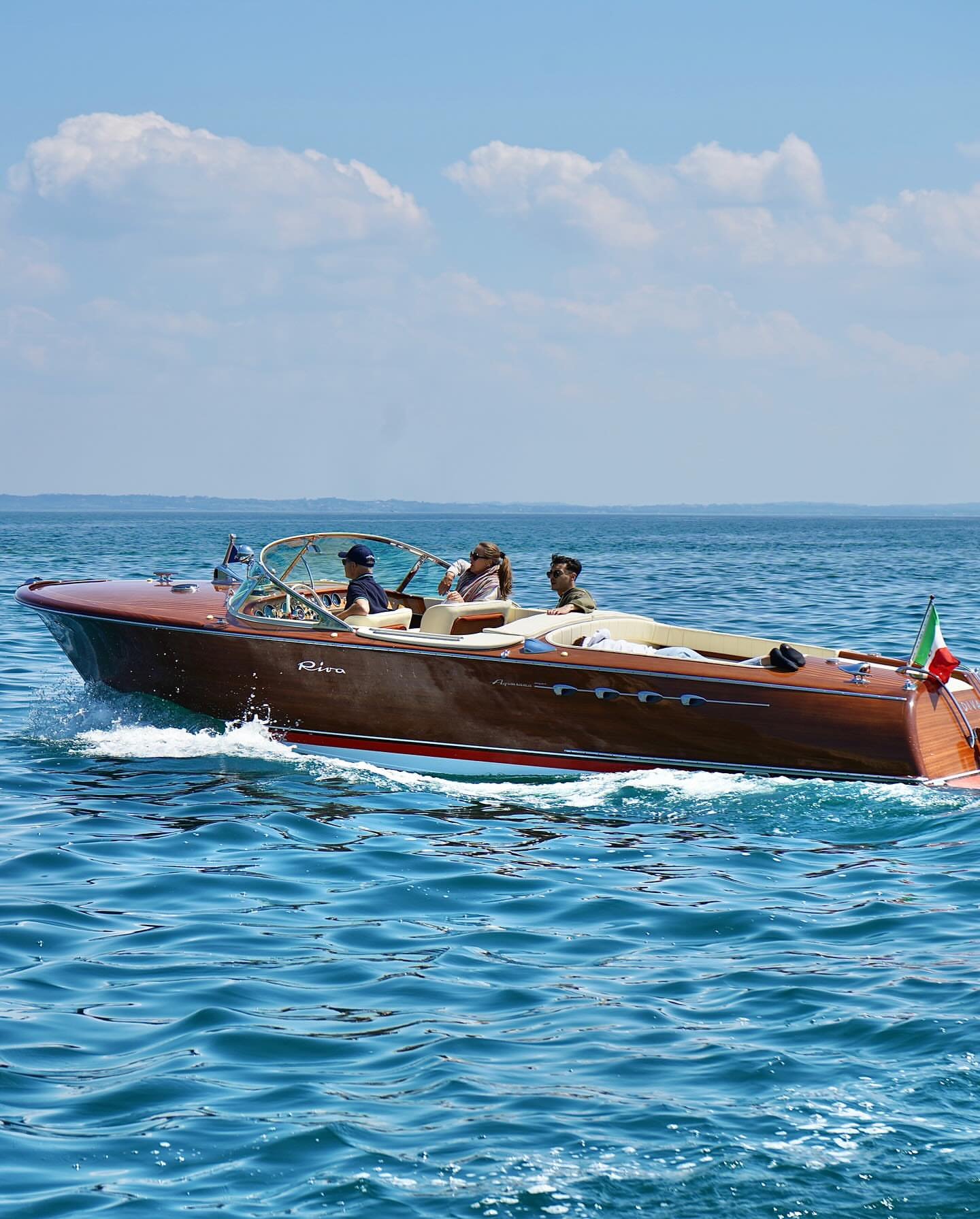
The lake also reveals itself best from the surface. Two hours on the water take you past Villa d’Este at Cernobbio and the neoclassical Villa Olmo before docking at the promontory the Italians call the Pearl of the Lake. The crossing, more than either shore, is the part that asks you to slow down.
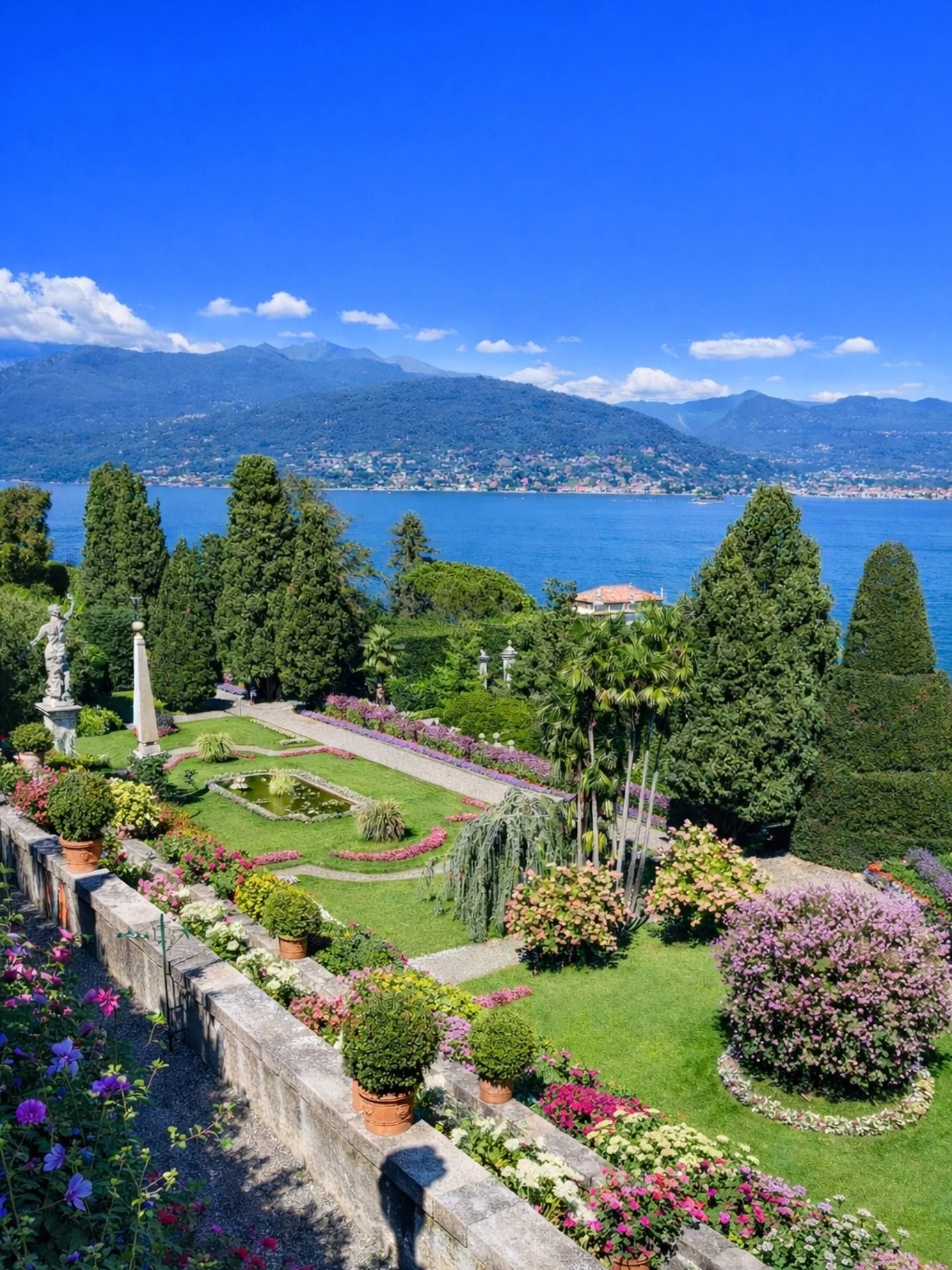
An island built to look like a ship.
An hour west, the second of the great lakes keeps a different sort of company. Stresa was made for long stays: belle époque hotels, terraces facing the water, a promenade Hemingway liked enough to write into A Farewell to Arms.
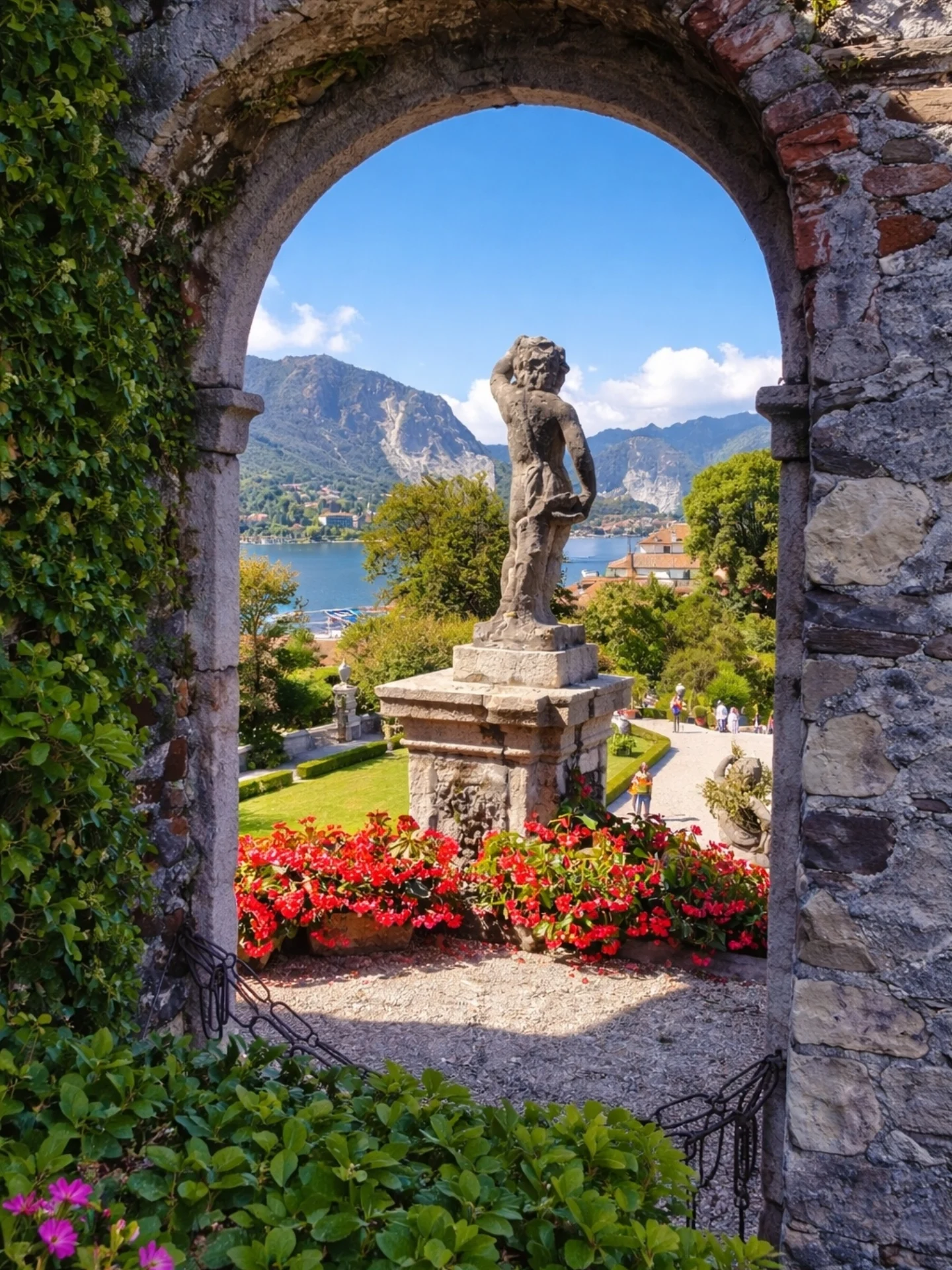
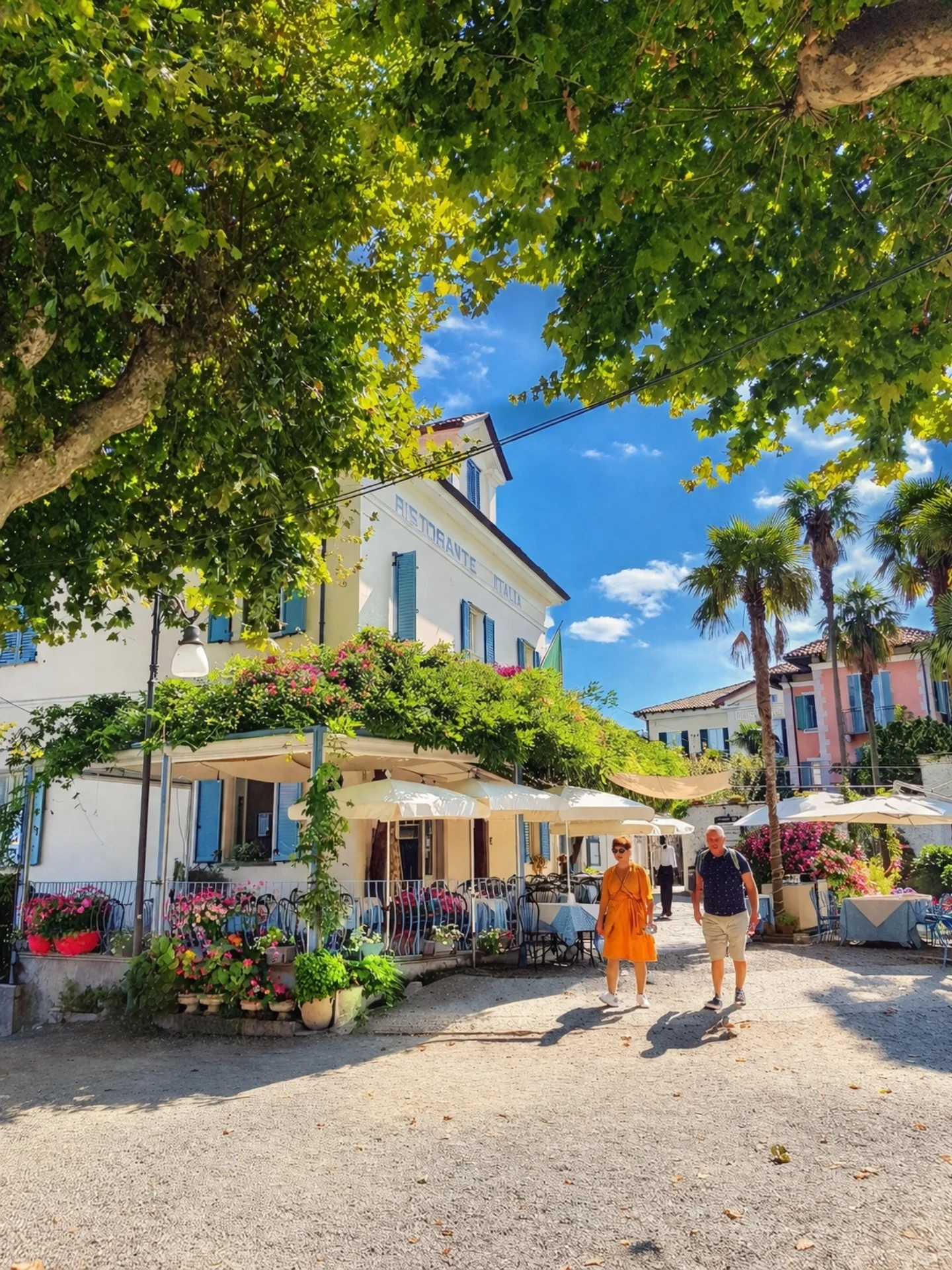
Out on the lake sit the Borromean islands. Isola Bella is the theatrical one, a bare fishing rock that a single family spent generations turning into a baroque palace and ten stacked terraces of garden, laid out so that from a distance the whole island reads as a ship at anchor. White peacocks patrol the top terrace. Isola Madre keeps the botanical collection, Isola dei Pescatori keeps the fishermen’s lanes and the better lunch.
The boat goes out in the afternoon, which is when this lake looks like itself.
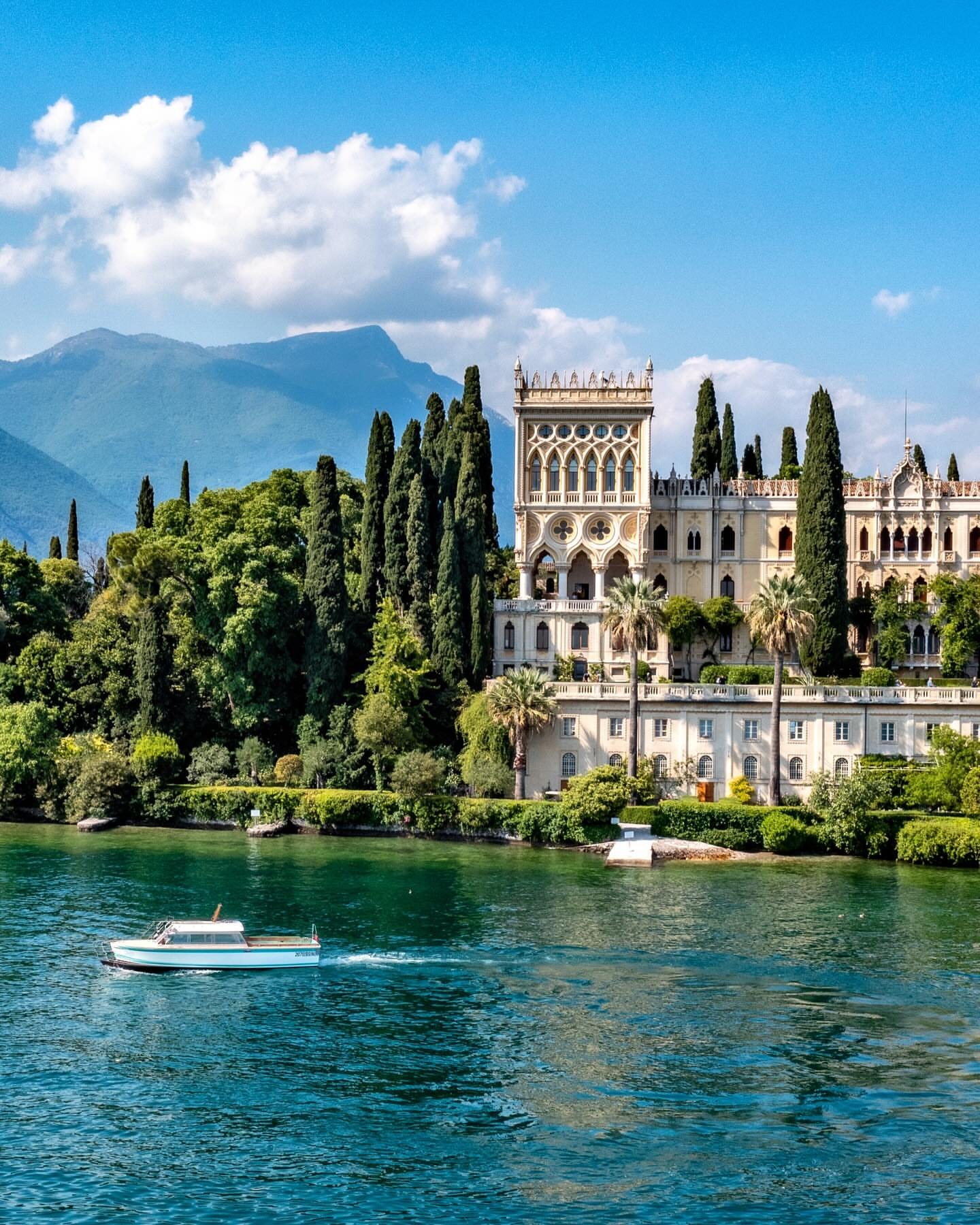
A Roman villa at the end of a peninsula.
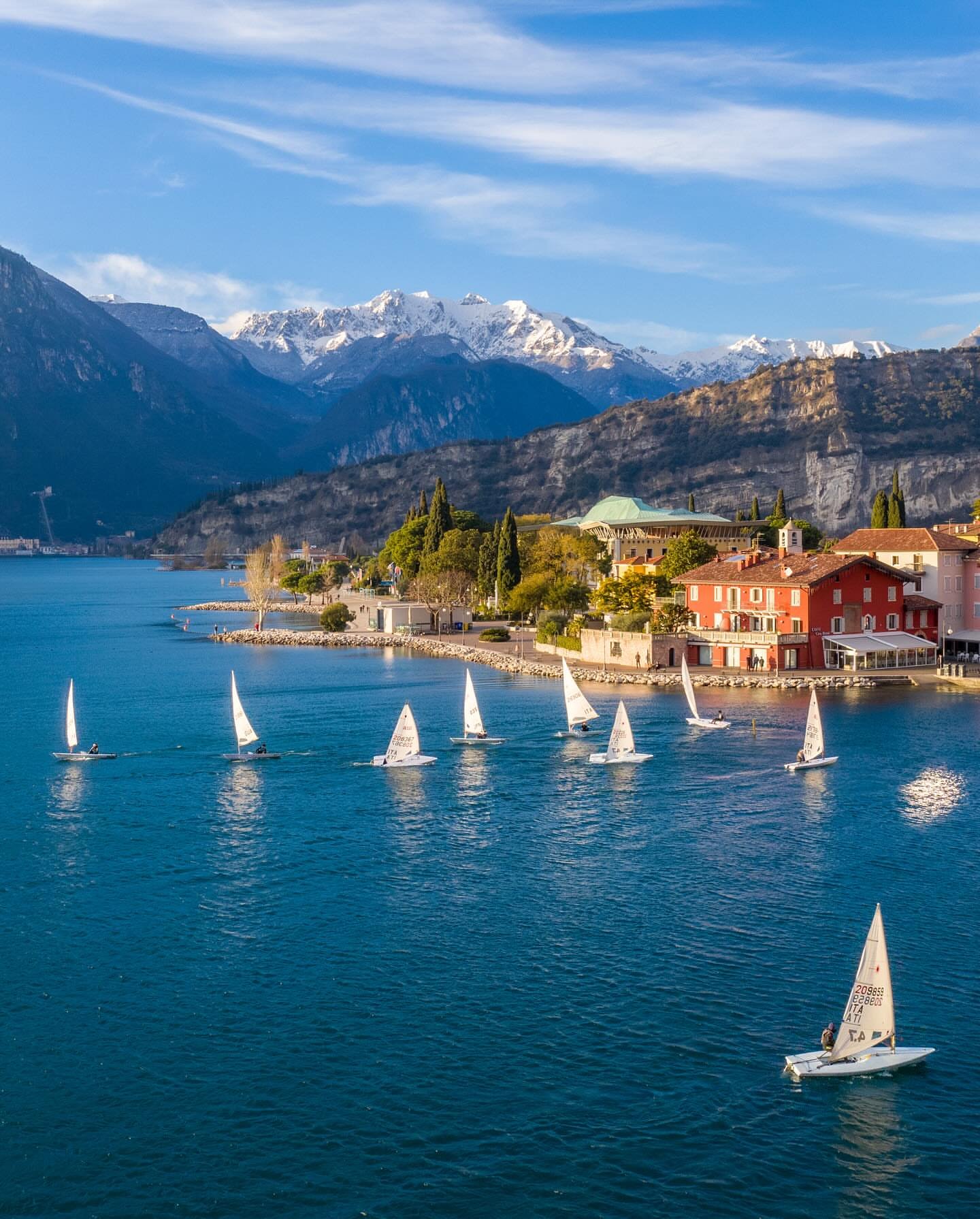
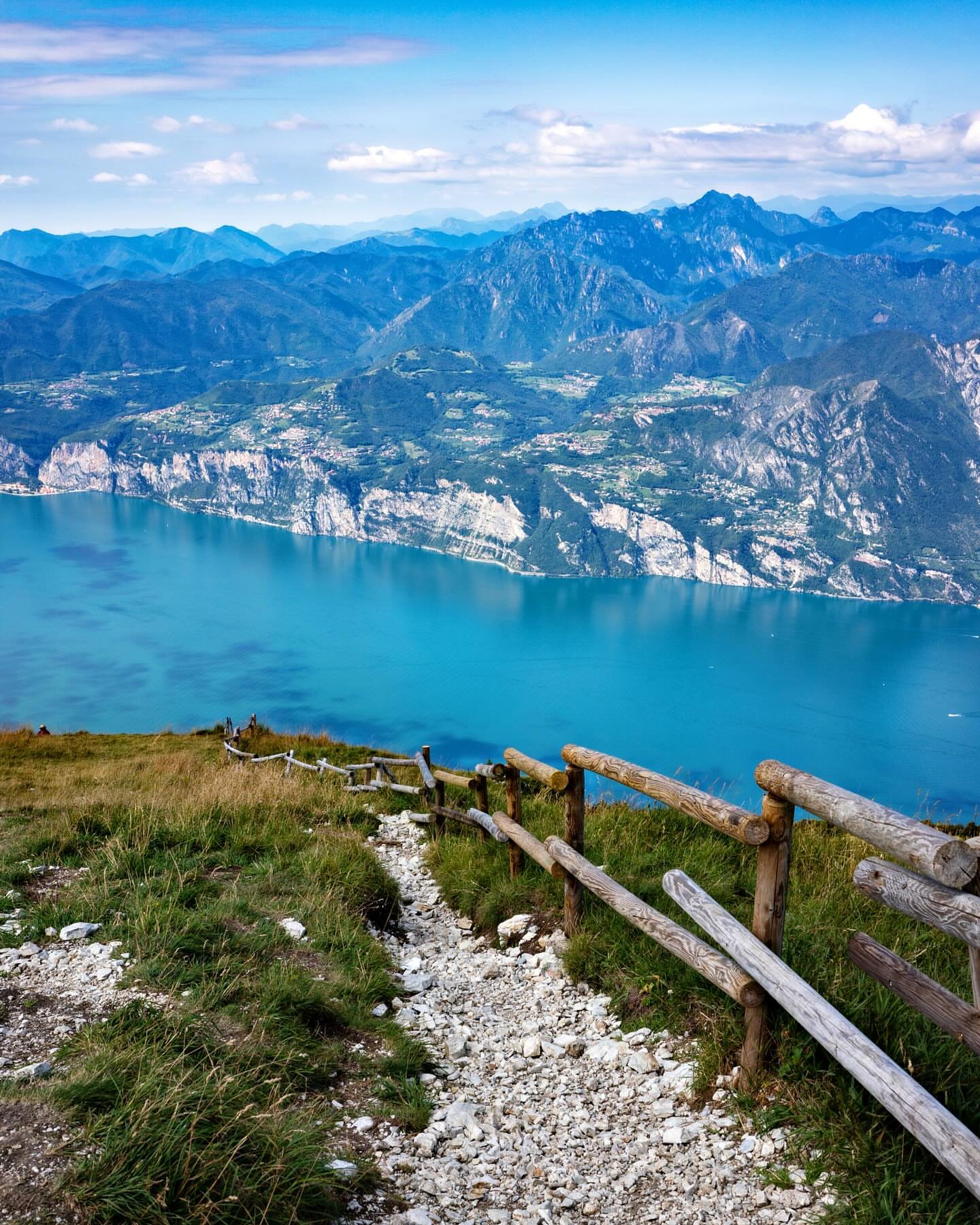
Garda is the largest of the lakes and the mildest, a basin carved by glaciers that now grows olives, lemons and cypress at a latitude with no business doing so.
Sirmione runs two kilometres into that water on a thread of land, guarded at its entrance by a castle standing in the lake itself. At the far tip are the Grotte di Catullo, the ruins of the largest Roman house in northern Italy, named for the poet who called Sirmio the gem of all peninsulas. Whether he ever owned it is uncertain. Standing between the columns with water on three sides, it stops mattering.
The day begins in Verona, which is the road Sirmione has always arrived by.
The red train that leaves the lakes behind.
There is a point where the lakes end and something colder begins. It starts at Tirano, in the Valtellina, where a small red train pulls out of an ordinary Italian street and simply starts climbing.
It climbs without cogwheels, the detail railway people never fail to mention: adhesion alone, curve after curve, over the spiral viaduct at Brusio, past Alp Grüm, up to the Bernina Pass and the milk-blue meltwater of Lago Bianco. Then it drops into the Engadin and hands you to St. Moritz, thirteen hours after Milan.
Bring a passport. The finest hour of the day is Swiss.
Come for the view. Stay for the pause.
Four bodies of water, one long afternoon light, and no particular reason to hurry between them.
The Grand Tour never really ended. It only got quieter.
Words: @quiet.livingjournal.